
How can I move to Tokyo?
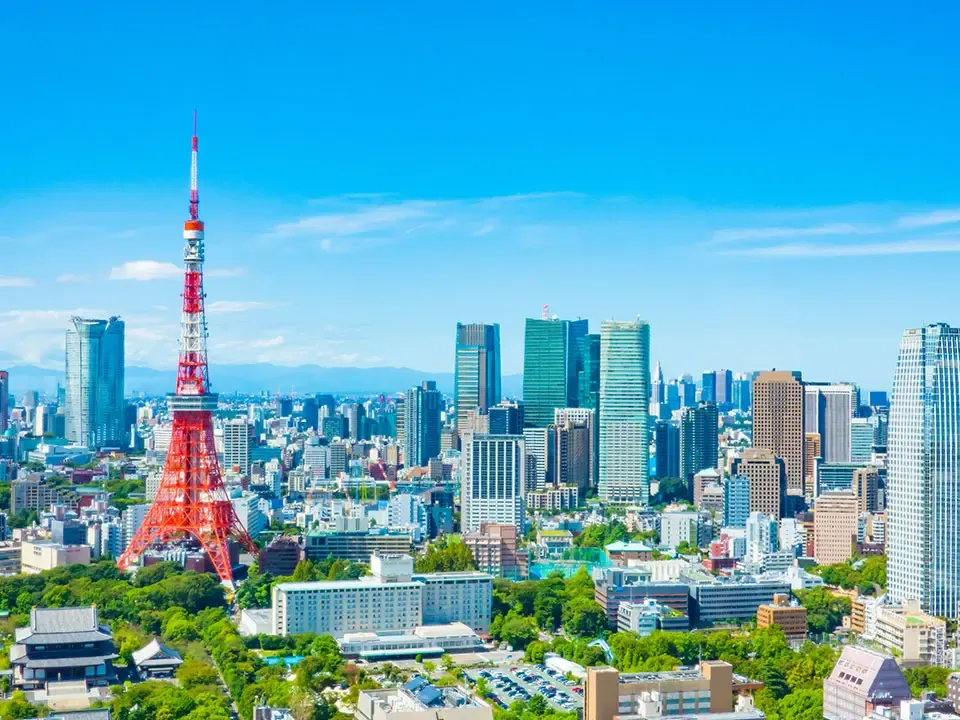
Do you want to move to Tokyo but have given up because of lack of money?
In fact, moving to Tokyo will cost money in many ways, including transportation costs and moving costs.
The most worrisome of all is "the money to rent a place to live in."
This section explains how much it actually costs and whether there are ways to reduce costs.
Expenses required for moving to Tokyo
Renting a typical rental property and living alone requires a variety of initial costs in addition to rent.
Living in a shared house instead of living alone also involves expenses other than rent, but the amount varies considerably.
If you compare the average rent in Tokyo, you will notice that the initial cost of renting a room is so different!
| ordinary rental apartment (studio) rent ¥86,000 | shared house (private room) rent ¥54,000 |
shared house (dormitory) rent ¥40,000 | |
|---|---|---|---|
| security deposit | ¥172,000 | ー | ー |
| deposit | ー | ¥30,000 | ¥30,000 |
| key money | ¥86,000 | ー | ー |
| advance rent | ¥86,000 | ¥54,000 | ¥40,000 |
| broker's fee | ¥86,000 | ー | ー |
| advance common service fee | ー | ¥15,000 | ¥15,000 |
| fire insurance | ¥10,000 | ¥10,000 | ¥10,000 |
| total | ¥440,000 | ¥109,000 | ¥95,000 |
Source: Comparison of initial costs between a shared house and a general rental apartment
Although this comparison is based on average rents and other expenses, the differences are quite large.
In addition to the above, you will also need to provide household goods when renting a typical rental property.
Some apartments are furnished with furniture and appliances, but the rent for such apartments increases, so the initial cost will be more.
On the other hand, a shared house is equipped with basic appliances. Although you may have to provide your own bedding, beds and desks are often provided, and in most cases, you will have no particular inconvenience from the day you move in.
One is a rental apartment property that requires several hundred thousand yen and the purchase of household goods just to rent a room, and the other is a shared house where household goods are provided as long as a room is rented. It is obvious that there is a huge gap in the amount of money needed to move up to Tokyo.
The Choice of a Shared House
One might imagine that "moving to Tokyo means living alone." But living alone is not the only option. One such option for moving to Tokyo is a shared house, which offers the following advantages.
Initial cost is much cheaper
The biggest advantage of choosing a shared house is the "low initial cost.
Even if we compare them in the same area, assuming a rental property with a rent of 86,000 yen and a shared house with a rent of 40,000 yen, the cost of moving in would be nearly 400,000 yen different. In the case of a rental property, an additional 100,000 yen or so will be required to furnish the household goods.
This would make a difference of 500,000 yen in initial costs alone.
With a shared house, the initial cost is around 100,000 yen. This is just an estimate, but doesn't this sound like a good way to save money for moving to Tokyo?
You can move in without a guarantor.
When you try to rent a typical rental property, you will inevitably need a guarantor. Even if there is no one to act as a guarantor, some properties can be rented through a "guarantee company," but this will cost more.
On the other hand, most shared houses can be rented without a guarantor.
A "guarantor" is not required, although the name and contact information of a relative may be given to the owner as an emergency contact.
You can move in even if you are looking for a job (unemployed)
Compared to ordinary rental properties, share houses do not have stringent screening requirements when moving in.
Some shared houses may require you to be working, but many allow you to live there even if you are "job seeking".
If you give the impression that you will remain unemployed for the future, you may be turned down, but in most cases, you will be able to move in if you can tell them that you are looking for work and promise to be able to pay the rent for the foreseeable future.
No need to furnish furniture and appliances
In a shared house, furniture and appliances are provided at the beginning.
That alone can save a lot of money in the first place.
In fact, even just the minimum necessary appliances such as a refrigerator, washing machine, and microwave oven will cost 50,000 to 100,000 yen if they are all new.
Other expenses, such as setting up an Internet environment and furnishings as needed, would be quite a bit of money.
The fact that this is not necessary is one of the attractions of shared houses.
It's easy to move in
If you are moving from a shared house to a shared house with all your household goods, in extreme cases, you can complete the move with just one backpack.
If you want to move to Tokyo but have not decided where you want to live, one good way to do so is to try living in various places on a trial basis. You can try living in a share house in a town you are interested in, see if it is comfortable for you, and if it is not, you can move to another town more easily than in a rental property.
Also, if you are looking for a job after moving to Tokyo, choosing a shared house will make it easy for you to move to a place that is easy to commute to once you have a job.
You can interact with other residents in the same shared house.
Living in a shared house is also recommended for those who want to move to Tokyo but feel lonely alone.
You can interact with people who live in the same shared house in the common spaces.
Especially if you have just arrived in Tokyo and don't know what to do, it would be helpful to have someone to whom you can feel free to ask questions.
In some shared houses, Japanese are not the only residents, so you may be able to experience cross-cultural exchange.
You can choose a private room or a dormitory.
There are two types of shared houses: "private room type" and "dormitory type."
- Private room type: Only the kitchen and bathrooms are shared. When you want to socialize with other residents, you can spend time in the living room, and when you want to be completely alone, you can be alone in your room.
- Dormitory type: Several people share a bedroom as well as a bathroom. The room capacity varies from shared house to shared house, with some rooms accommodating two people, while others are large dormitories with bunk beds lined up in rows. In Japan, shared houses are basically separated by gender, but some share houses that accept foreigners may not separate men and women in a "mixed" house, so be sure to check carefully when you apply.
If you want to save money on a place to live but also need time alone, a private room in a shared house will cost less than a regular rental apartment in terms of the initial cost and rent.
Procedures required to move to Tokyo
Whether you are moving to a rental property or a shared house, you will need to follow the procedures for moving.
Notification of moving out and in
You must submit a notification of moving out at your local municipal office/town hall between 14 days prior to and on the day you plan to move.
Be careful not to lose the "Moving-out Certificate" given to you at the time of submission, as it is required for notification at your new residence.
Once you move to your new residence, you must submit a notification of moving into your new residence to the municipal office or town hall of your new location within 14 days.
Cancellation/registration of a seal (registered seal)
If you have registered a seal (registered seal), this must be done as well.
Upon submitting the notification of moving out, the seal registration at the current address will be "cancelled," but the new address will require a new "registration" at the municipal office/town hall.
Change of various registered addresses
Various registered address changes are required as a result of moving to a new residence. The following three changes must be ensured
- Credit cards
- Bank accounts
- Driver's license
Since many of the information, etc. is also "non-forwardable," if you have not changed your address, you may experience unnecessary problems such as not being able to receive your new card, so be sure to make the necessary changes. In addition, the following changes of address procedures are required
- Smartphone
- EC sites (Rakuten or Amazon, etc.)
- Life insurance and other types of insurances
Mail forwarding procedures
If you apply for the forwarding service, your mail at your old address will be forwarded free of charge for one year.
It is very convenient to receive information about stores and services that you have failed to change your address, or your friends' New Year's greeting cards that you have failed to inform them of your move.
Some omissions of address changes or failures to notify your friends of the address change will be discovered later, even if you thought you had done so. We recommend you go through the mail forwarding process as it will serve as a reminder of such things.
- Post office counter
- Posting of a special form ((You need to obtain a "Notification of Change of Address Form" at the post office in advance)
- Internet application(e-relocation)
The transfer period is only for one year, during which time you should complete the change of address procedure and notify them of your change of address.
Have you always wanted to move to Tokyo someday, but have been hesitant or put off the idea because of the large amount of money it would cost? Why don't you consider living in a shared house as an option, rather than just assuming that "moving to Tokyo means living alone"? The initial cost will be significantly lower, and you will be able to see "moving to Tokyo" as an attainable goal, not just a "someday" goal.