
What are the most popular areas in Tokyo?
Even if you want to live in a shared house in Tokyo, you may not know which area to choose.
Each area of Tokyo has its own unique characteristics, and there are so many JR and subway lines that it is hard to know where to place the criteria for selection in the first place.
Therefore, we would like to introduce "popular areas" in Tokyo to you. We will introduce the characteristics of each area and available train lines, so please use this as a reference when choosing a location for your shared house.
Shibuya area (Shibuya, Ebisu, Nakameguro)
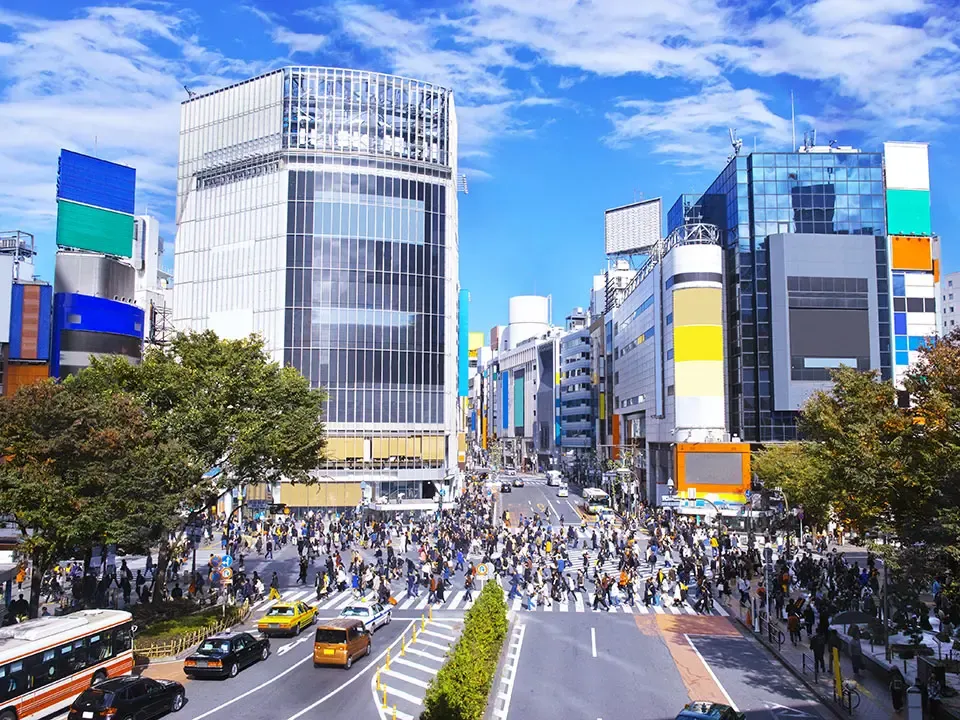
The area around Shibuya is popular for its convenient access to various train lines.
In addition to restaurants and apparel stores, many offices are located a short distance away from the station.
Therefore, it is possible to live and work in the Shibuya area and live in the Shibuya area.
This convenience is naturally reflected in the rent, but it does not cost as much as living alone in a shared house.
Also, in Shibuya, Ebisu, and Nakameguro, many of the shared houses have stylish interiors, as does the city itself.
Many of the properties will fulfill your wish to live in Tokyo in a fashionable way and will expand your imagination!
There are many clubs in Shibuya where both beginners and adults can enjoy, and there are also many other places where they can enjoy music, such as live houses and DJ bars, which is one of the attractions of Shibuya.
There are also several attractive art museums in the area, including Bunkamura THE MUSEUM in Shibuya and the Tokyo Photographic Art Museum in Ebisu. The area around the Tokyo Photographic Art Museum is a commercial complex known as Yebisu Garden Place, which often appears as a location for TV dramas. Visitors can enjoy movies, shopping, and dining while strolling through the beautiful scenery.
The cherry blossoms along the Meguro River, which are featured in the news every year during the cherry blossom season, are also accessible on foot from Ebisu and Nakameguro.
Available train lines
- Shibuya Sta.→JR Yamanote Line, Shonan Shinjuku Line, Saikyo Line / Tokyo Metro Hanzomon Line, Ginza Line, Fukutoshin Line / Tokyu Toyoko Line and Denentoshi Line / Keio Inogashira Line
- Ebisu Sta.→JR Yamanote Line, Shonan Shinjuku Line, Saikyo Line / Tokyo Metro Hibiya Line
- Nakameguro Sta.→Tokyo Metro Hibiya Line / Tokyu Toyoko Line
The Tokyu Toyoko Line, which originates from Shibuya, allows you to go through Nakameguro to Yokohama without transfers, and it is operated directly with the Tokyo Metro Fukutoshin Line so allows you to access Ikebukuro and beyond to the Saitama area without transfers.
Shinjuku area (Shinjuku, Nakano, Koenji)
The area around Shinjuku Station is a really good area for shopping and dining out. It is one of the areas where you can enjoy just hanging out with friends even if you don't have anything in particular to buy.
There are many places to go drinking around Shinjuku Station, including Kabukicho, and many places to shop, including station buildings and commercial facilities such as department stores, so there are many jobs available for restaurants and store clerks.
In addition, just a short distance away from the station, there is an office district. The Nishi-Shinjuku area in particular is lined with office buildings centering on the Tokyo Metropolitan Government Building.
Nakano and Koenji offer shopping and dining out in a different atmosphere than Shinjuku.
Koenji in particular is one of the most popular places for young people, with Shin-Koenji Street, which runs from the JR station to Tokyo Metro Shin-Koenji Station, lined with quaint coffee shops, restaurants, and vintage clothing stores. There are many stores with artistic exteriors, making it an enjoyable area just to walk around the shopping street. There are many Japanese-style pubs that have retained their good old-fashioned atmosphere, and the area around the JR station and under the elevated railway tracks are particularly crowded.
The area also has many live music clubs that create a unique atmosphere and has long been known as a "rock town," and people with musical instruments can often be seen.
If you want to live in a town with some commercial facilities, but not as many as Shinjuku, Nakano is the town suitable for you.
The area is convenient for shopping, with “Nakano Broadway”, “Nakano Marui”, and other stores.
In particular, “Nakano Broadway” is known as a "mecca for subcultures.
Available train lines
- Shinjuku Sta.→JR Yamanote Line, Sobu Line, Saikyo Line, Chuo Line, Shonan Shinjuku Line / Toei Shinjuku Line and Oedo Line / Keio Line, Keio New Line / Odakyu Line
- Nakano Sta.→JR Sobu Line, Chuo Line
- Koenji Sta.→JR Sobu Line, Chuo Line (The Chuo Line rapid train does not stop on Saturdays, Sundays, and national holidays.)
Shinjuku Station is served not only by JR lines but also by subways and private railways, providing easy access not only to Tokyo metropolitan area but also to Saitama and Kanagawa areas. In addition to trains, there are also a variety of bus routes.
In addition, many night buses depart from and arrive at and around Shinjuku Station, so those who are planning to use night buses to return to their hometowns will find it convenient to be close to Shinjuku.
*Nakano and Koenji stations are respectively a 10-15 minute walk from the JR station on the Marunouchi Line.
Ikebukuro area (Ikebukuro, Sugamo)
Ikebukuro station itself is adjacent to many commercial facilities, and the area around the station is also very bustling.
In particular, "Sunshine City" is one of the symbols of Ikebukuro, a commercial complex that includes not only a shopping center but also an aquarium, observation deck, event space, and offices.
You will find the "Otome Road", a sacred place for female anime geeks who love Japanese anime and manga near Sunshine City. This area used to be called the center of otaku culture in Ikebukuro, but the Naka-Ikebukuro area, where “hareza Ikebukuro” was opened in 2020, is now also called "Otome Park," giving the impression that the center of the area has shifted. However, the area around Ikebukuro Station is as vibrant as ever in the excitement of otaku culture, and there are many collaborative cafes and other such activities.
If you want to live in the Ikebukuro area but at a lower rent, we also recommend the Akabane Station area, which is 10 minutes away on the JR Saikyo Line.
If you prefer to live along the Yamanote Line, we recommend the area around Sugamo Station, two stops on the Yamanote Line from Ikebukuro Station.
One would think that Sugamo, also known as "Grandma's Harajuku," would be an elderly-friendly town, but it is a lively place with stores where you can buy daily necessities at low prices and long-established restaurants. The area is popular for its calm atmosphere, safety, and easy access to Ikebukuro, which is less than 10 minutes away by train.
Available train lines
- Ikebukuro Sta.→JR Yamanote Line, Saikyo Line, Shonan Shinjuku Line, Tokyo Metro Marunouchi Line, Yurakucho Line, Fukutoshin Line, Seibu Ikebukuro Line, Tobu Tojo Line
- Sugamo Sta.→JR Yamanote Line, Toei Subway Mita Line
Shinagawa area (Shinagawa, Omori)
Shinagawa has a Yamanote Line station and a Keikyu Main Line station, making it very accessible for those who frequently travel both to Tokyo and Yokohama area. Therefore, rent is expensive if you try to rent a room. That is why we recommend a shared house in the Shinagawa area.
Shinagawa Station also contains commercial facilities, but there are also many office buildings in the area.
If you prefer an area with a little more sense of everyday life than Shinagawa, we also recommend Omori, which is two stops away from Shinagawa and only five minutes by train.
Omori Station is a JR station with commercial facilities attached to it, and a short distance away from the station is a very livable environment with many residential areas.
In addition, although only the Keihin Tohoku and Negishi JR lines are available, the Keikyu Main Line and Tokyo Monorail stations are also within walking distance, depending on the location.
The area around Kamata Station, next to Omori, is also bustling with shopping streets and restaurants, and a short distance away from the station is a residential area, providing a comfortable living environment.
If you prefer to live along the Yamanote Line, the Gotanda area, two stops from Shinagawa Station on the Yamanote Line, has recently become a popular area. While there are many offices and other facilities, there are also many bars.
Available train lines
- Shinagawa Sta.→JR Tokaido Main Line (Tokyo-Atami), Yamanote Line, Keihin Tohoku Line, Yokosuka Line / Keikyu Main Line
- Omori Sta.→JR Keihin Tohoku Line
Shinagawa Station is convenient for frequent travelers and those who plan to use the Shinkansen or airplane to return to their hometowns, as it has Shinkansen departures and arrivals for the Kansai region and easy access to Haneda Airport.
Other areas are also open for consideration!
In addition to the areas introduced here, there are many other unique areas in Tokyo. One of the greatest things about living in a shared house is that you can actually try living in a shared house to see what kind of environment you would be comfortable to live in.
The initial cost is significantly less than a typical rental property, and since there is no need to move household goods, it is easy to move to another area if you are interested in another area. If you see a property you are interested in, it would be a good idea to visit it.